
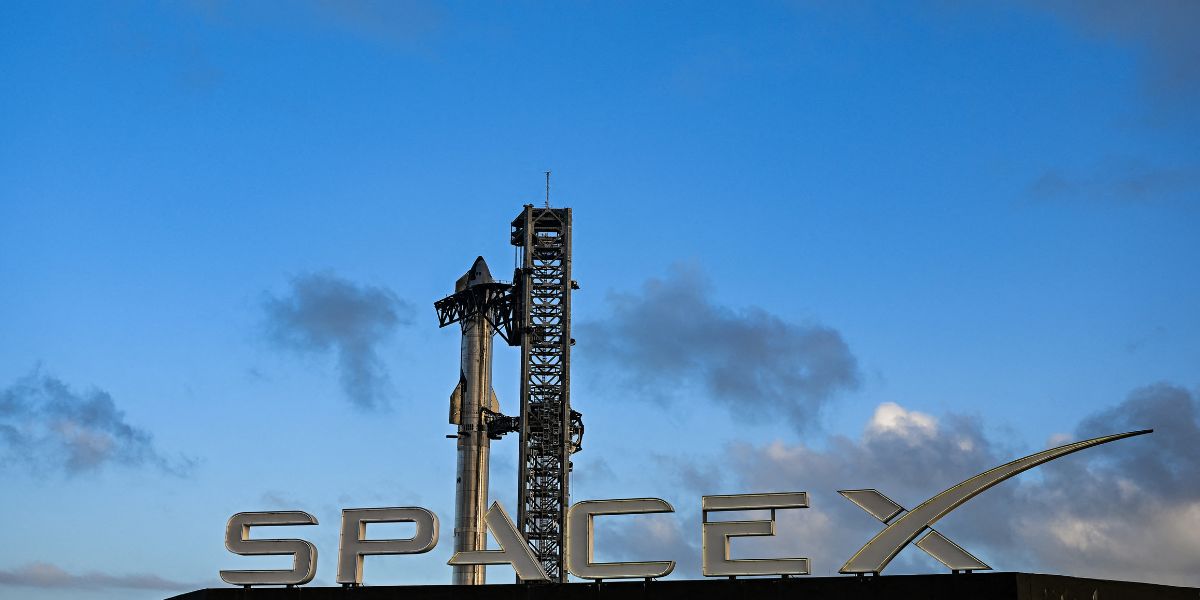
Three years of relentless testing has brought SpaceX to a pivotal moment. The company is unveiling Starship Version 3, not as an incremental upgrade, but as a complete reimagining of what a fully reusable rocket can be. To document this engineering journey, SpaceX has launched “Test Like You Fly,” a new documentary series that pulls back the curtain on the factories and launch pads where the future of space travel is being forged.
The stakes have never been higher. Starship represents one of the most formidable engineering challenges in modern history: creating the world’s first fully reusable orbital-class rocket. Unlike traditional spacecraft that are used once and discarded, both the Super Heavy booster and the Starship upper stage are designed to land vertically at the launch tower, be refuelled, and fly again. This philosophy of rapid reusability could fundamentally transform the economics of spaceflight, making missions to the Moon, Mars, and beyond far more affordable.
The Version 3 upgrade marks a significant leap forward. Everything has been rebuilt from the ground up. The new ship features a taller, more efficient design. The booster has been completely redesigned with integrated structural improvements. Most importantly, Version 3 will fly with the new Raptor 3 engine for the first time, a powerplant capable of delivering more thrust while requiring less thermal protection than its predecessors. Even the launch infrastructure is new; Flight 12 will lift off from Starbase Pad 2, a facility purpose-built for the next generation of testing.
The scale is staggering. Standing over 120 metres tall, the fully stacked Starship system is the most powerful rocket ever built. To put this in perspective, it exceeds the Saturn V, the legendary moon-rocket that carried Apollo astronauts to the lunar surface in the 1960s and 1970s. Yet SpaceX is not resting on this achievement. The company’s ambitions extend far beyond Earth orbit. Engineers continue to perfect in-space refuelling techniques, which are essential for long-duration missions to Mars. They’re also developing the Starship Human Landing System, a crewed variant selected by NASA as part of the Artemis program for lunar missions as early as 2027.
The journey to this point has been marked by both triumph and setback. Since the first full-stack launch in April 2023, Starship has flown eleven times. The early missions were costly lessons, with several vehicles not surviving their test flights. However, the most recent launches demonstrated significant progress, proving that SpaceX’s iterative design philosophy works. Engineers learned something valuable from each attempt, feeding those lessons directly into the next vehicle. This is precisely what “Test Like You Fly” aims to illustrate: failure is not the opposite of progress, but rather a stepping stone toward it.
The documentary series takes viewers inside SpaceX’s sprawling manufacturing facilities at Starbase, Texas, where hundreds of engineers and technicians work in coordinated precision to assemble the most complex machines ever built. Viewers will witness the static fire tests, where engines are ignited at full throttle whilst the vehicle remains anchored to the launch pad. These tests validate every system before the risk of flight. The series also grants access to the control rooms and decision-making chambers where SpaceX’s leadership navigates the constant tension between ambition and engineering reality.
What makes Version 3 particularly compelling is what it represents philosophically. Rather than patching previous designs, SpaceX chose to reset, acknowledging that some of the best engineering improvements come from starting fresh. This approach is risky; redesigns consume time and resources. But it also reflects a company willing to challenge its own assumptions in pursuit of a revolutionary goal.
The path forward is still uncertain. No Starship has yet achieved full orbital velocity with both stages intact. In-space refuelling remains untested. The thermal protection systems must be refined further. These challenges demand more tests, more data, more iterations. Yet the progress is undeniable. SpaceX’s stated ambition to send unmanned cargo missions to Mars before the end of 2026 may sound audacious, but it no longer sounds impossible.
“Test Like You Fly” is more than a behind-the-scenes documentary. It’s a narrative about how humanity approaches seemingly impossible challenges. It’s about the thousands of engineers who believe that rapid reusability will unlock the solar system. And it’s about a company betting its future on the idea that failure, when approached with rigor and purpose, accelerates progress.
The next generation of Starship is here. Everything is new. And the eyes of the world are watching to see what SpaceX will accomplish next.